Painting as Storytelling
The human figure is our most powerful point of connection. This workshop teaches you to use it, not just as subject, but as a bridge between your experience and the viewer's.
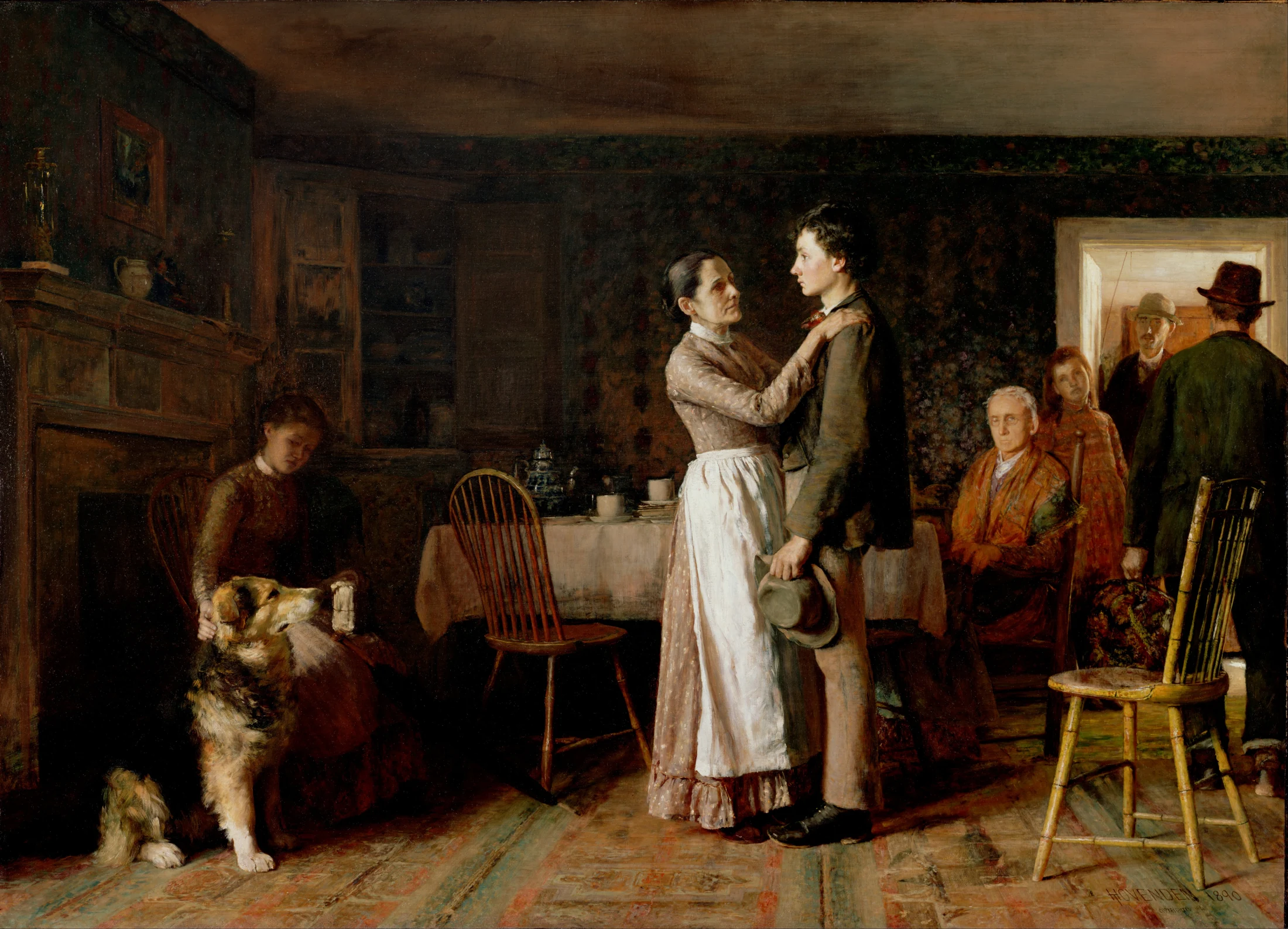
Why the Human Figure Matters
Rehumanism puts people back at the center of art. Not out of nostalgia: we’re wired to read faces and bodies, and a painted person reaches us faster than almost anything else.
Mirror Neurons and the Empathy Machine
When you see a human face, your brain does something remarkable: it simulates the emotion it perceives. This isn't a metaphor. Mirror neurons, discovered in the 1990s, literally fire as if you are experiencing what the person in front of you is feeling.
This is why a well-painted face is the most powerful tool in an artist's arsenal. When Rembrandt paints an aging man's weathered, knowing expression, your mirror neurons fire. You don't just see the weariness, you feel it. You understand something about aging, dignity, and endurance without a single word being spoken.
This is what makes the human figure so uniquely powerful, it's an empathy machine that literally makes the viewer feel what the subject feels. Other approaches can move us too (a Rothko can bring you to tears), but the figure creates a specificity of connection that's hard to achieve any other way. This is why Rehumanism gravitates toward representational work — not as the only valid approach, but as an especially potent one.
When you paint a human figure with care, attention, and empathy, you're not just depicting a body, you're creating a bridge between two people who may never meet. The painting becomes a mirror (the viewer sees themselves) and a window (they see into someone else's experience). This is art's deepest function.
The Figure as Mirror and Window
Every great figurative painting works on two levels simultaneously:
- Mirror: The viewer recognizes something of themselves. "That tired posture, I've felt that." "That tentative reach toward another person, I know that gesture." The painting validates the viewer's own experience.
- Window: The viewer sees into another person's reality. "I've never been an elderly woman sitting alone, but now I understand something about what that might feel like." The painting expands the viewer's empathy.
The best figurative painting does both at once. The viewer thinks: "This is about me AND about someone else AND about all of us." That's the moment of connection. That's art doing its job.
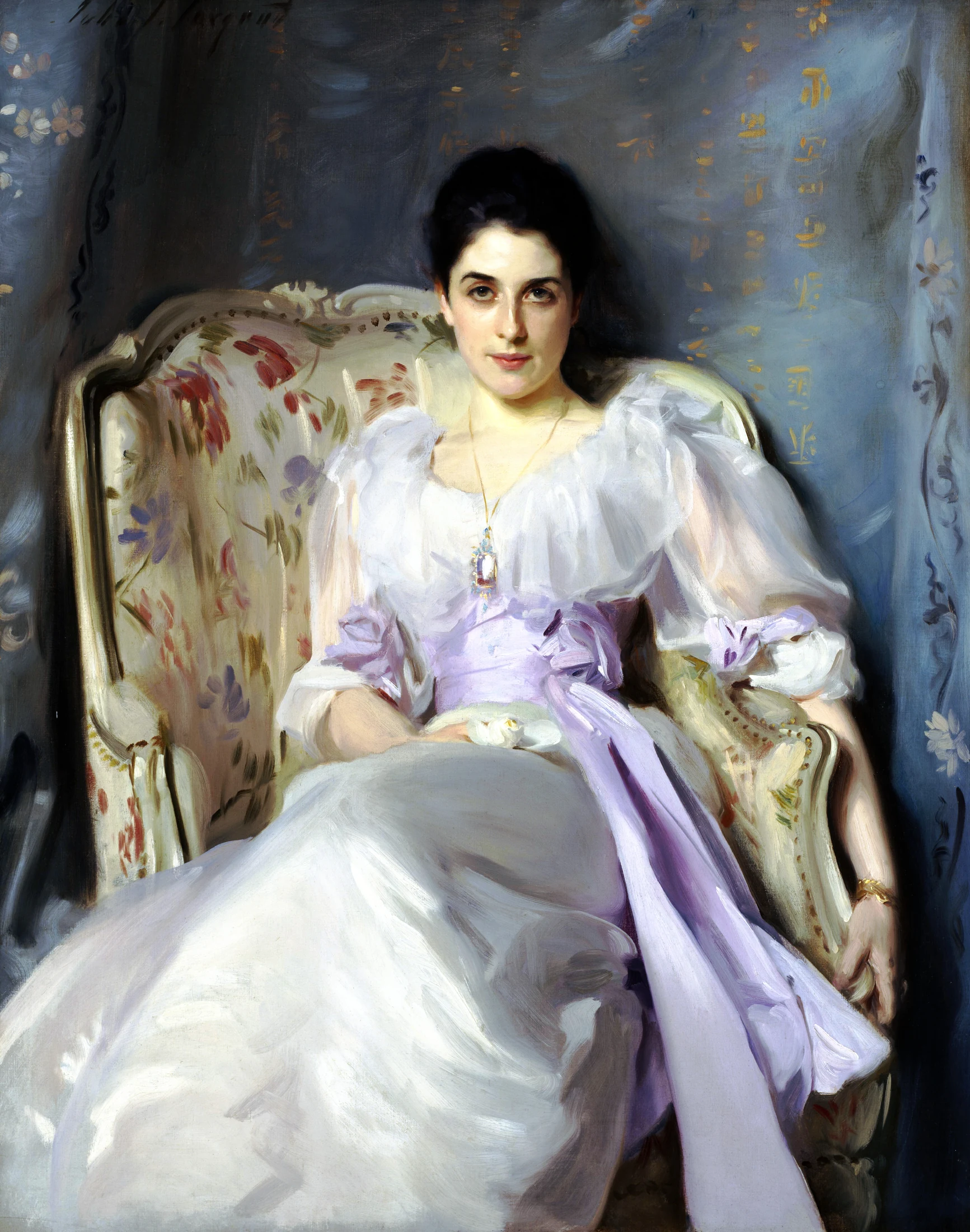
Look at Sargent's Lady Agnew. You feel her composure immediately, the relaxed hands, the direct gaze, the slight tilt of her head that suggests both confidence and quiet challenge. Your mirror neurons fire before you've consciously registered what she looks like. You don't just see a woman in a chair; you feel what it's like to be that self-possessed. The painting is a mirror: you recognize composure you've felt. And a window: you enter a specific person's interior life across a century of distance.
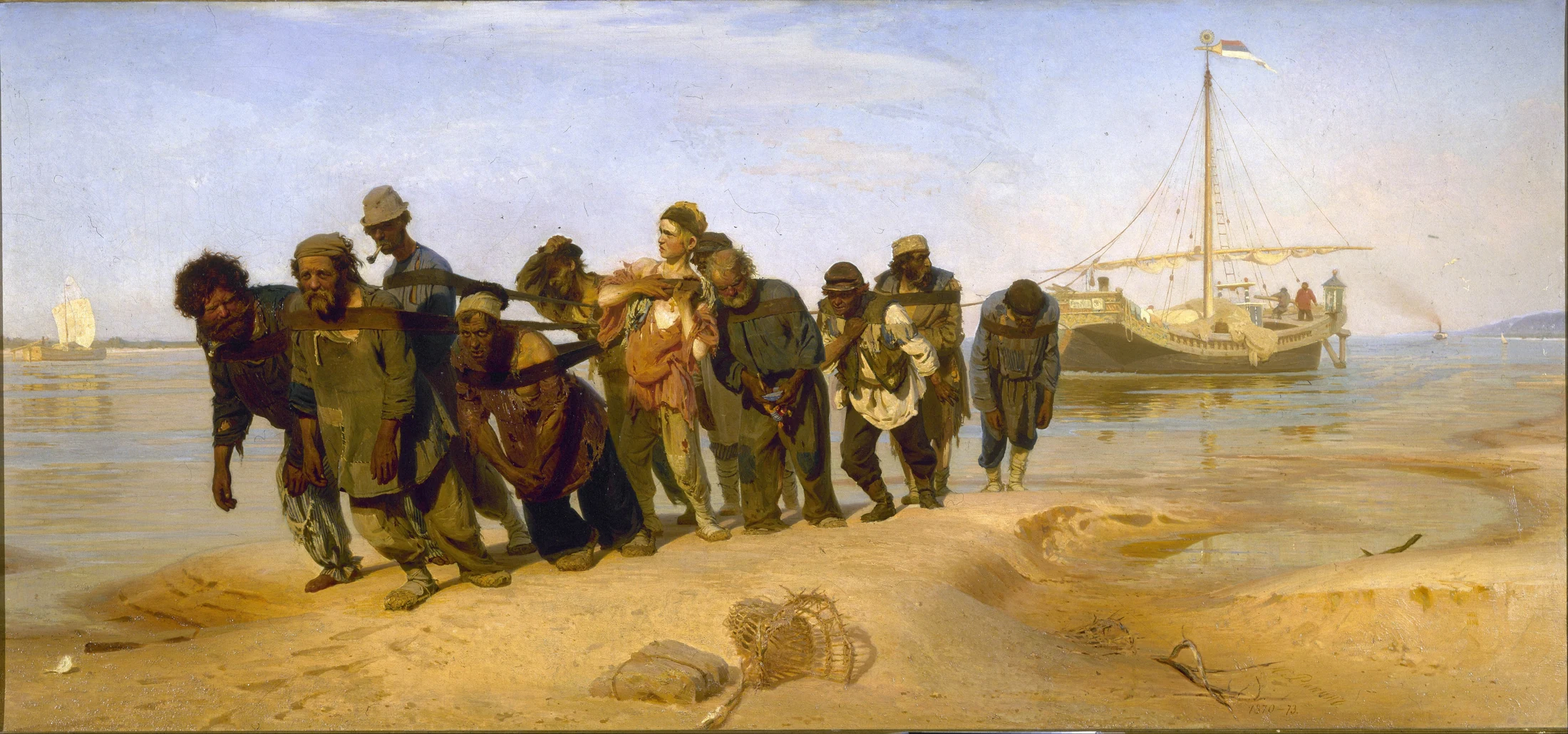
Now look at Repin's Barge Haulers. Eleven men straining against ropes, dragging a barge upriver. Repin spent years sketching actual barge haulers. Each face is individualized — this one is resigned, that one furious, this one young and still has hope. You see eleven specific human beings, not a "social type." The painting is a window into labor and suffering you may never experience. But the expressions, the weariness, the endurance, the stubborn dignity, are mirrors. You recognize those feelings. The painting creates empathy across 150 years and an ocean of difference.
Go to a public place (cafe, park, transit stop). Sketch 5 different people in quick gesture drawings (2-3 minutes each). For each person, write one sentence about what you imagine they're feeling based on their body language. Then ask yourself: what would a painting of this person offer a viewer? What mirror? What window?
1. Think of a painting of a human figure that moved you deeply. What made the connection so strong?
2. Why do you think the human figure was removed from "serious" art in the 20th century? What was gained? What was lost?
The Architecture of Narrative
A painting that tells a story is not an illustration. It's a visual poem, a single, frozen moment that contains an entire human experience.
How Masters Embed Story
Narrative painting is not about showing "what happened." It's about choosing the one moment that contains the entire emotional arc, past, present, and implied future — in a single frame.
The masters used a specific visual grammar to embed story. Understanding this grammar is essential:
The Five Tools of Visual Narrative
- 1. Gesture The body tells the truth even when the face is hidden. A hand reaching, pulling away, clenching, releasing. The angle of shoulders, bowed, squared, turned away. Gesture is the first thing the viewer reads, before they even focus on a face. Practice: Spend one week sketching only hands. Then only shoulders. You'll start seeing the narrative vocabulary of the body.
- 2. Gaze Where are the figures looking? At each other? Past each other? At the viewer? Away? Gaze creates invisible lines of force in a painting. Two figures gazing at each other create intimacy. A figure gazing out of the frame creates mystery or longing. A figure looking directly at the viewer creates confrontation or invitation.
- 3. Placement & Proximity How close are the figures? Is there space between them? Who is higher, lower? Who is in light, who in shadow? Spatial relationships are emotional relationships. A six-inch gap between two painted hands can contain an entire love story.
- 4. Light — Light in narrative painting is not just illumination, it's moral force. What the light touches is what matters. What's in shadow is hidden, denied, or lost. A face half in light, half in shadow tells a story of internal conflict without any need for text.
- 5. The Decisive Moment The narrative painter's greatest skill is choosing which moment to paint. Not the climax, that's too loud. Not the aftermath, that's too still. The best narrative paintings capture the moment just before or just after the turning point. The moment of decision. The moment of realization. The suspended breath.
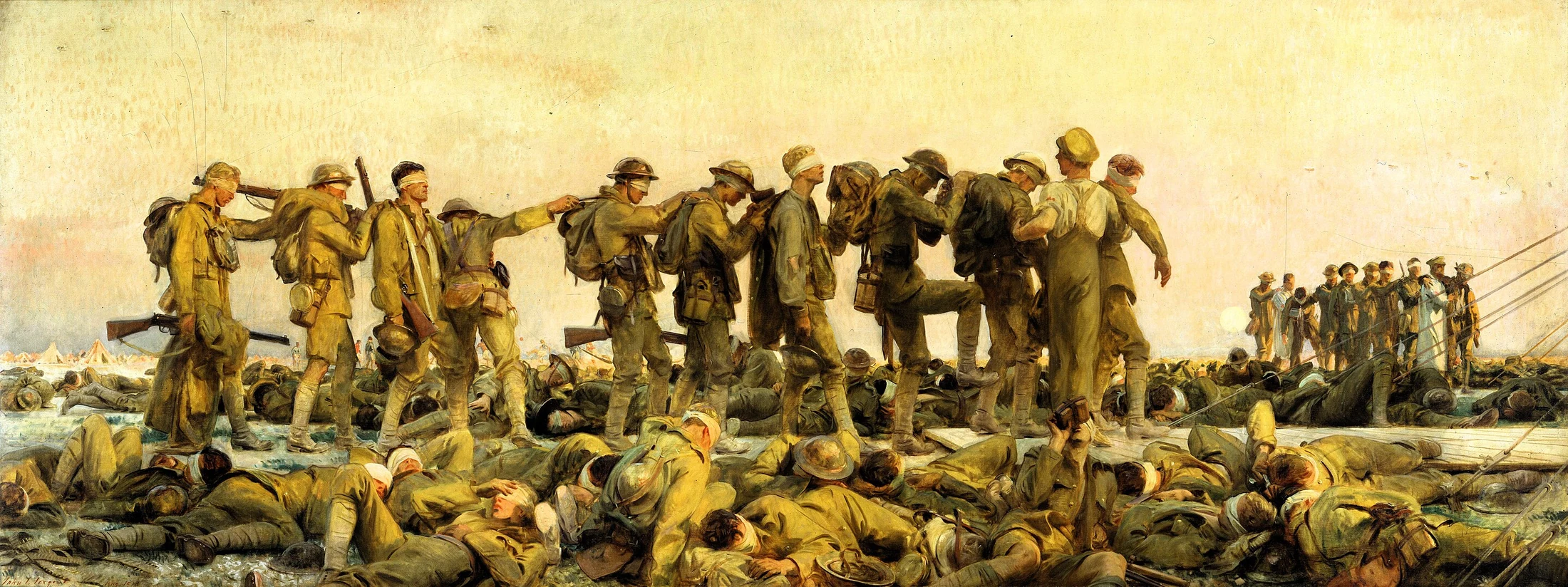
A line of soldiers, blinded by mustard gas, stumbling forward with hands on each other's shoulders. Sargent chose NOT to paint the gas attack itself. He chose the aftermath, the dependency, the vulnerability, the terrible intimacy of men who cannot see leading men who cannot see. The narrative is in the gesture: hands gripping shoulders. Trust born of shared suffering. The painting tells us everything about war that statistics cannot.
Create 3 thumbnail compositions (small, 3x5 inches) of a scene with 2 figures. The rule: no faces visible. Tell the story entirely through gesture, placement, proximity, and light. Suggested scenes:
- A farewell
- A reconciliation
- A secret being shared
If the narrative reads clearly without faces, you've mastered the grammar of visual storytelling.
Allegory for Our Time
The great narrative painters didn't just depict scenes from life, they elevated specific moments into universal statements about the human condition. You can do the same.
What Is Allegory?
Allegory is when a specific, concrete scene carries a larger, universal meaning. A painting of a woman holding a candle in a dark room is also about hope persisting in despair. A painting of a child reaching for a parent's hand is also about the universal human need for security and love.
Allegory is not symbolism (where a dove = peace, a skull = death). It's subtler than that. It's when the entire scene, rendered truthfully, resonates beyond its specific subject to touch something archetypal.
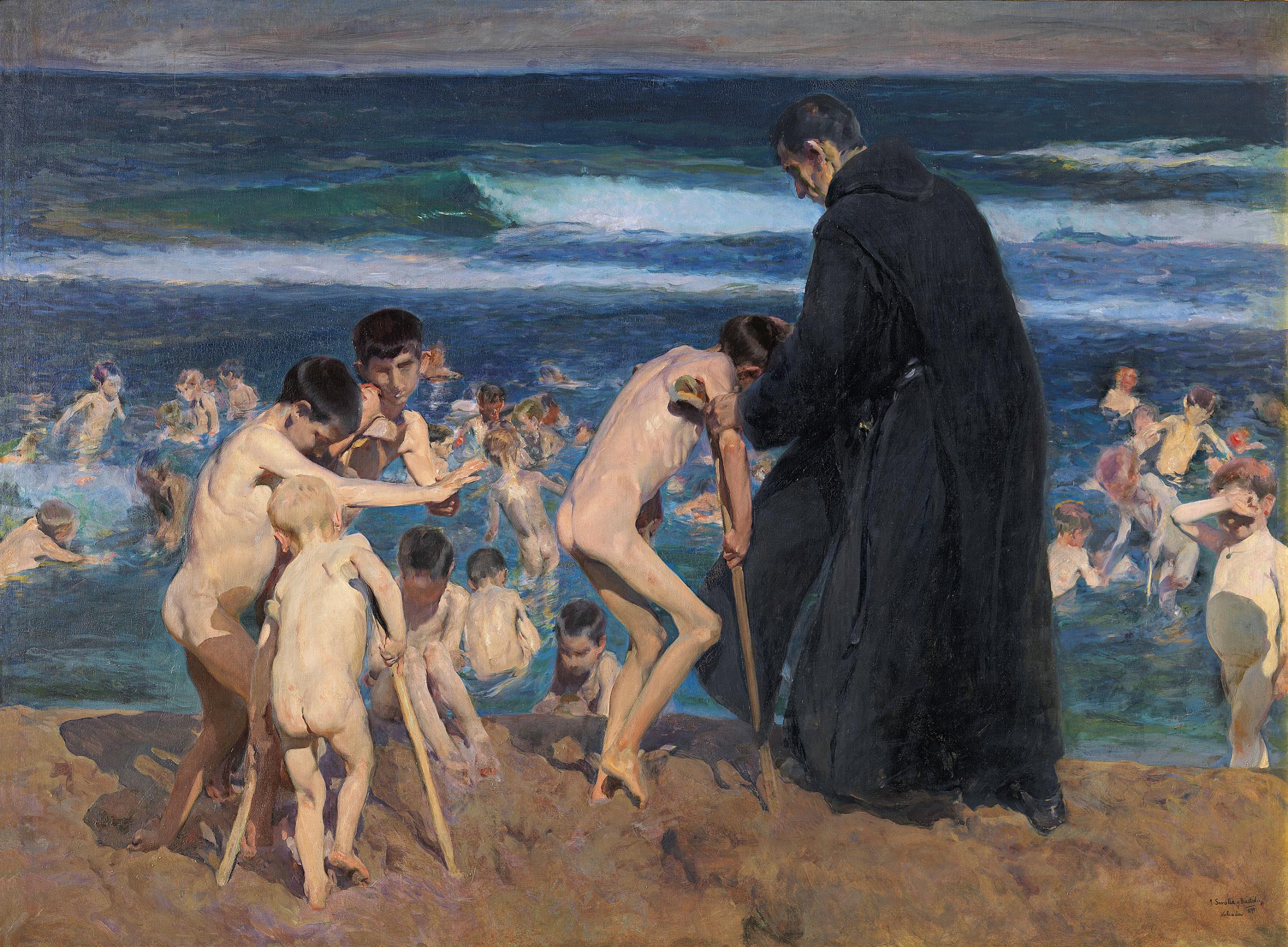
The Wounds of Our Time
The Conru Art Foundation's Rehumanism Guide identifies the deepest human needs that art can address right now. These are the themes most likely to create the "mirror and window" effect, because nearly everyone is experiencing them:
The defining wound of our age. Everyone is connected; everyone is lonely. Art that depicts genuine human togetherness — not sentimentally, but truthfully, is medicine.
Grief that is given visual form becomes bearable. Art that sits with sorrow, that neither fixes it nor drowns in it, validates the mourner's experience.
In a post-religious, post-ideological landscape, people are hungry for purpose. Art that depicts moments of clarity, calling, or quiet conviction speaks to this hunger.
The world is miraculous and we've forgotten how to notice. Art that restores the sense of awe, in ordinary scenes rendered with extraordinary attention — reawakens presence.
Choose one of the four themes above. Now create a specific, concrete scene from your own life or observation that embodies that theme without literally illustrating it. Sketch the composition.
Example: "Isolation → Connection" might become: Two people sitting on a park bench, not quite touching, one has turned their head slightly toward the other. That's it. No symbols. Just the truth of two humans tentatively reaching toward each other. The allegory is in the rendering, the quality of attention you give the light on their faces, the six inches of space between them.
Composition as Emotional Architecture
Where you place things in the frame is not a formal exercise, it's a moral choice. Composition is how you tell the viewer what matters.
The Grid of Meaning
Every compositional decision is an emotional decision. Consider:
- Center placement = importance, stability, confrontation. A figure dead center demands to be reckoned with.
- Off-center placement = tension, movement, searching. A figure pushed to the edge of the frame is about to leave, or has just arrived.
- High placement = aspiration, power, transcendence. Low placement = groundedness, humility, weight.
- Diagonal lines = energy, instability, drama. Horizontal lines = calm, rest, endurance. Vertical lines = dignity, aspiration, resolve.
- Negative space = what's absent. A figure surrounded by empty space feels isolated. Two figures in a crowded composition feel overwhelmed.
Leading the Eye Through a Story
Great narrative compositions don't just show a scene, they choreograph the viewer's journey through it. The eye enters (usually at a bright or contrasting point), travels along a path (following gazes, gestures, and value contrasts), arrives at the emotional center, and then is held there or gently released.
Think of it as directing a film with a single frame. You control what the viewer sees first, second, third. You control the emotional rhythm: tension → release → realization.
Choose a simple scene: a figure at a window. Now create 9 different thumbnail compositions of the same scene, changing:
- The figure's placement (center, edge, high, low)
- The light direction
- The ratio of figure to negative space
- What's visible through the window (and what isn't)
Notice how dramatically the meaning changes with each arrangement. Same subject. Completely different stories. This is the power of composition as narrative tool.
The Love Letter
The shift from "What do I want to express?" to "What can I offer?" This is the emotional core of Rehumanist painting.
Self-Expression vs. Generous Expression
Most art education frames painting as self-expression: "What do you want to say? What's your unique voice?" This isn't wrong, but it's incomplete. It makes the artist the center of the exchange.
Rehumanism adds a second question: "What does the viewer need? How can this painting serve someone who's having a hard day, who feels unseen, who's lost in the noise?"
The shift is subtle but transformative. When you paint with the viewer in mind, your choices change:
- You render the face with more care — because you want the viewer to feel that face as a real person.
- You attend to beauty more seriously, because beauty is how you invite the viewer to stay.
- You include more emotional truth, because the viewer needs to feel recognized, not lectured.
- You work harder at craft, because sloppy execution sends the message "I didn't care enough to get this right for you."
Think of someone specific — a friend going through a hard time, a family member, a stranger whose face stayed with you. Paint something for them. Not a portrait of them (unless you want to), but a painting that you imagine would help them specifically. What do they need? Comfort? Energy? A reminder that beauty exists?
Write a brief note (even just for yourself) explaining: "I made this for ___ because I think they need ___."
This is the practice of painting as love letter. It transforms the studio from a place of self-expression into a place of service.
Your Narrative Masterwork
Everything converges: figure, narrative, allegory, composition, intention. Now it's time to plan the painting you've been building toward.
The Masterwork Concept
A "masterwork" in the Rehumanist tradition isn't just a technically excellent painting. It's a painting that:
- Tells a story that matters (narrative)
- Uses the human figure as an empathy bridge (figure)
- Resonates beyond its specific subject (allegory)
- Guides the viewer's emotional experience through composition (architecture)
- Is made with love, with the viewer's experience as the primary concern (intention)
- Meets the three-pillar test: Beauty, Truth, Love
Create a one-page concept for an ambitious narrative painting. Include:
- The Scene: What specific moment are you depicting? Why this moment?
- The Allegory: What universal human theme does this scene embody?
- The Wound It Addresses: Which of the "wounds of our time" does this painting speak to?
- The Viewer's Experience: What do you want someone to feel standing in front of this painting?
- The Mirror & Window: What will the viewer recognize of themselves? What new experience will they enter?
- The Composition: A thumbnail sketch showing key figures, light source, and eye path.
- The Three-Pillar Check: How does this painting serve Beauty? Truth? Love?
This document becomes your roadmap. Pin it to the studio wall. Refer to it when you lose your way mid-painting. It keeps the why alive while you wrestle with the how.
1. How has your understanding of "narrative painting" changed through this workshop?
2. Do you feel the tension between self-expression and service? How do you navigate it?
3. What story needs to be told right now, a story only you can paint?